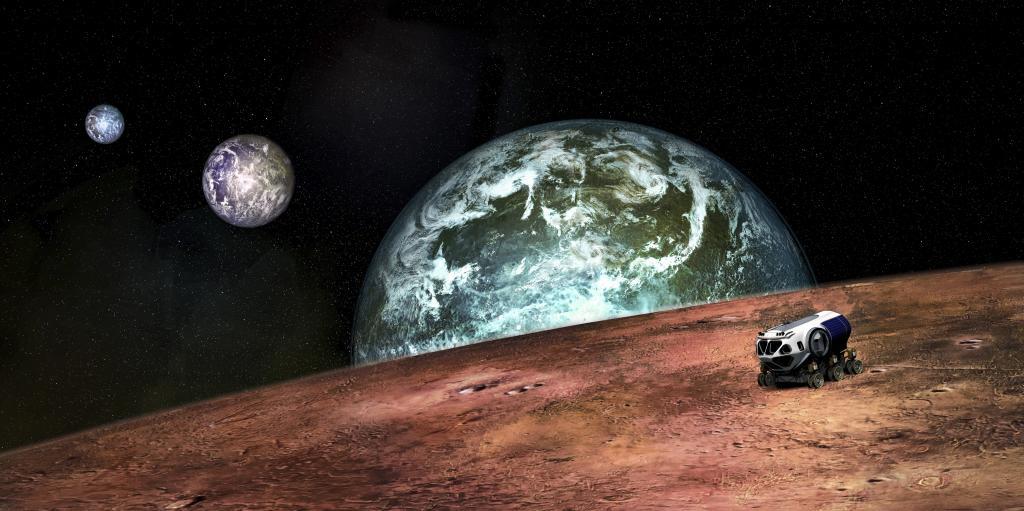
Two interesting exoplanets are added to the already long list of worlds discovered outside our solar system.
Both are in the same planetary system (called TOI-1752) and located at a distance of 337 light-years from Earth. Their existence has been confirmed by a team led by scientists from the Institute of Astrophysics of the Canary Islands (IAC). Specifically, it was the MuSCAT2 instrument installed on the Carlos Sánchez Telescope, located at the Teide Observatory (Tenerife). The initial discovery was made with TESS, a NASA satellite dedicated to searching for planets outside the Solar System, as detailed in the study published in the journal Monthly Notices of the Royal Astronomical Society.
One of the two planets (TOI-1752 b) is extremely hot, and scientists believe it could be a lava world. The other one (TOI-1752 c) has an intermediate size, between Earth and Neptune, and is located in the habitable zone of the star, meaning at a distance from its star that theoretically would allow it to host liquid water under certain conditions. This does not imply the presence of life, but it could meet the conditions for it.
The star of this planetary system is a red dwarf, a type of star smaller than our sun, which facilitates the discovery of small worlds using a widely used astronomical technique called transit detection.
Basically, this strategy consists of detecting planets by measuring the slight dimming of a star when a planet passes in front of it. Scientists can estimate the size of the planet compared to its star based on how much the light decreases. Also, the time it takes for each planet to pass in front of the star allows the calculation of the distance at which it orbits its star and how long a year lasts on that world.
Due to the small size of red dwarfs, the decrease in brightness is proportionally greater, making it easier to identify these small worlds.
Representation of the distances at which the lava world (TOI-1752 b) and the potentially habitable exoplanet (TOI-1752 c) are locatedAlberto Peláez Torres (IAA-CSIC)
In the case of these two new exoplanets, the one close to its star takes less than a day to complete its orbit and is exposed to a large amount of radiation to the point that, according to scientists, it could reach temperatures high enough to maintain molten rock on the hemisphere facing the star. "This scenario could favor the formation of a secondary atmosphere, generated from materials released by the planet's own surface," explain the authors in a press release.
As for the second planet, TOI-1752 c, the one believed to be potentially habitable, its temperature is around 20 degrees, and the irradiation it receives from its star is similar to what Earth receives from the Sun. However, to determine if it is habitable, further observation would be needed with more instruments, such as those on the James Webb Space Telescope.
For Samuel Geraldía, a researcher at the IAC and co-author of the discovery, the finding of TOI-1752 c is very promising, as not many planets of this type are known. "It is a relic that will help us understand a little more about the processes of planetary formation and evolution along with its internal composition," he states in the press release.